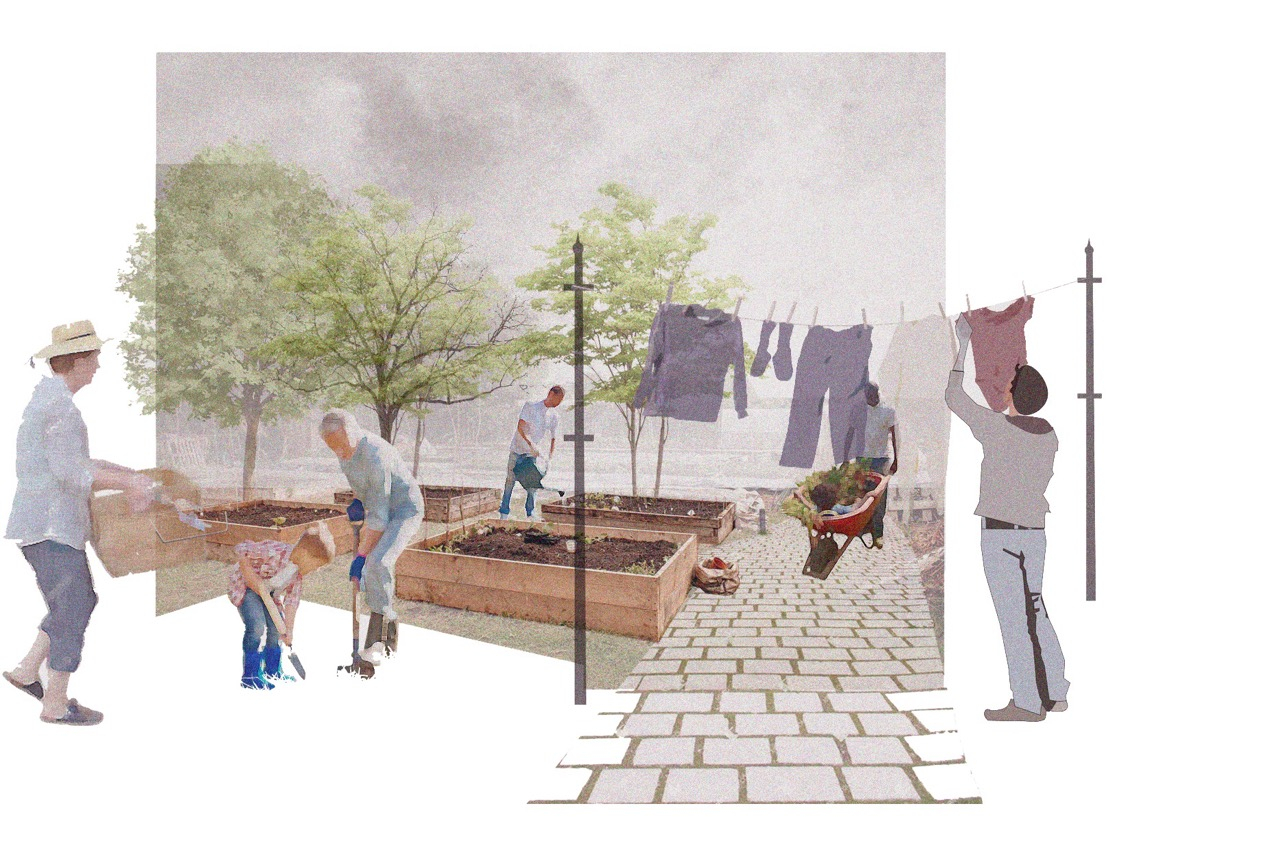
It is now common practice to home the elderly out of urban centres pushing them away to live in an almost retreat, distanced from community life. Fundamentally, this project allows people to remain in their community and continue to be an active part of it through the integration of the design with the provision of activities to improve wellbeing and nutrition, mitigating isolation. In many ways, food is the key to understanding this project, serving as the connection between the outdoor and indoor spaces. The project prioritises the role of food in community life, increasing awareness of food poverty through a strategically placed foodbank.
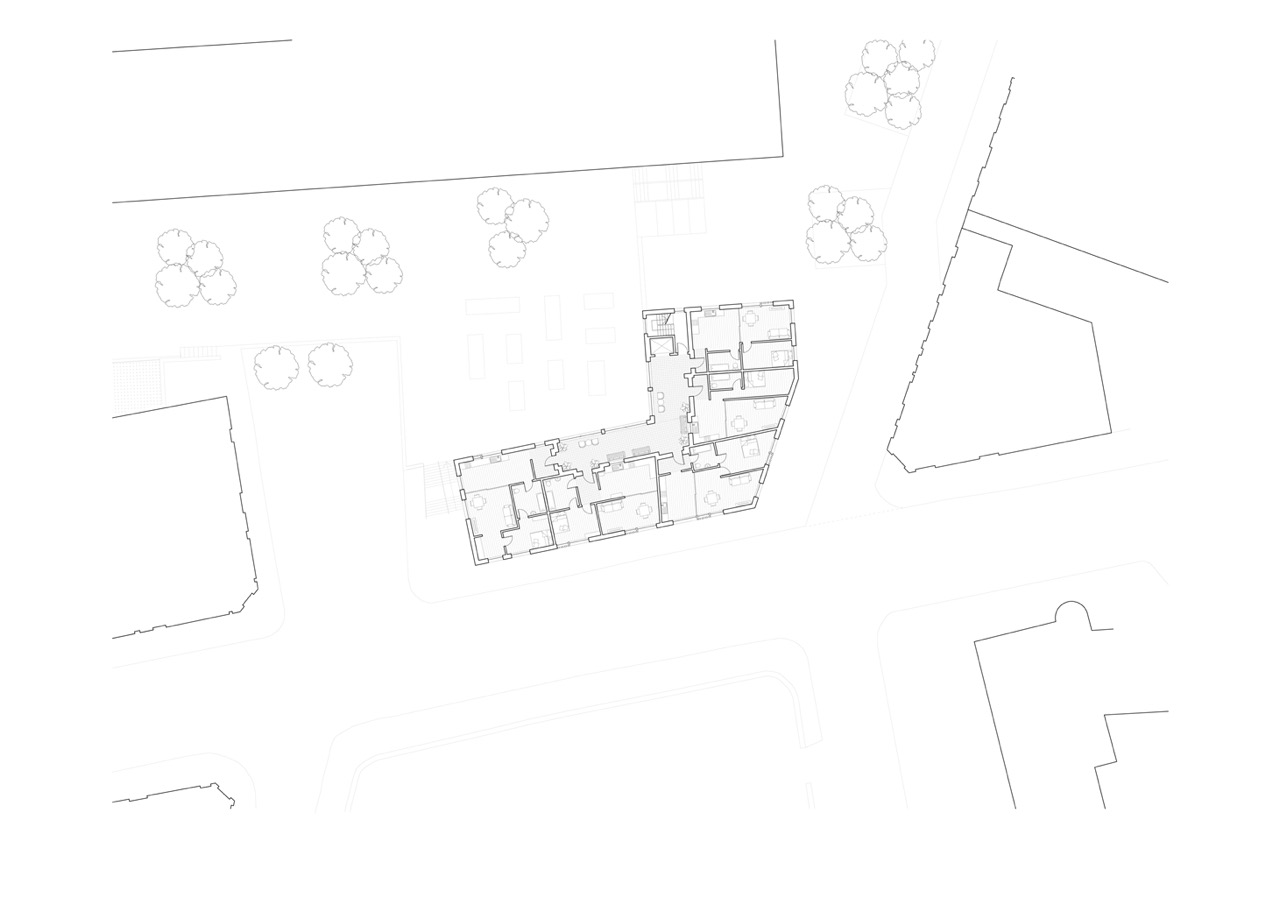
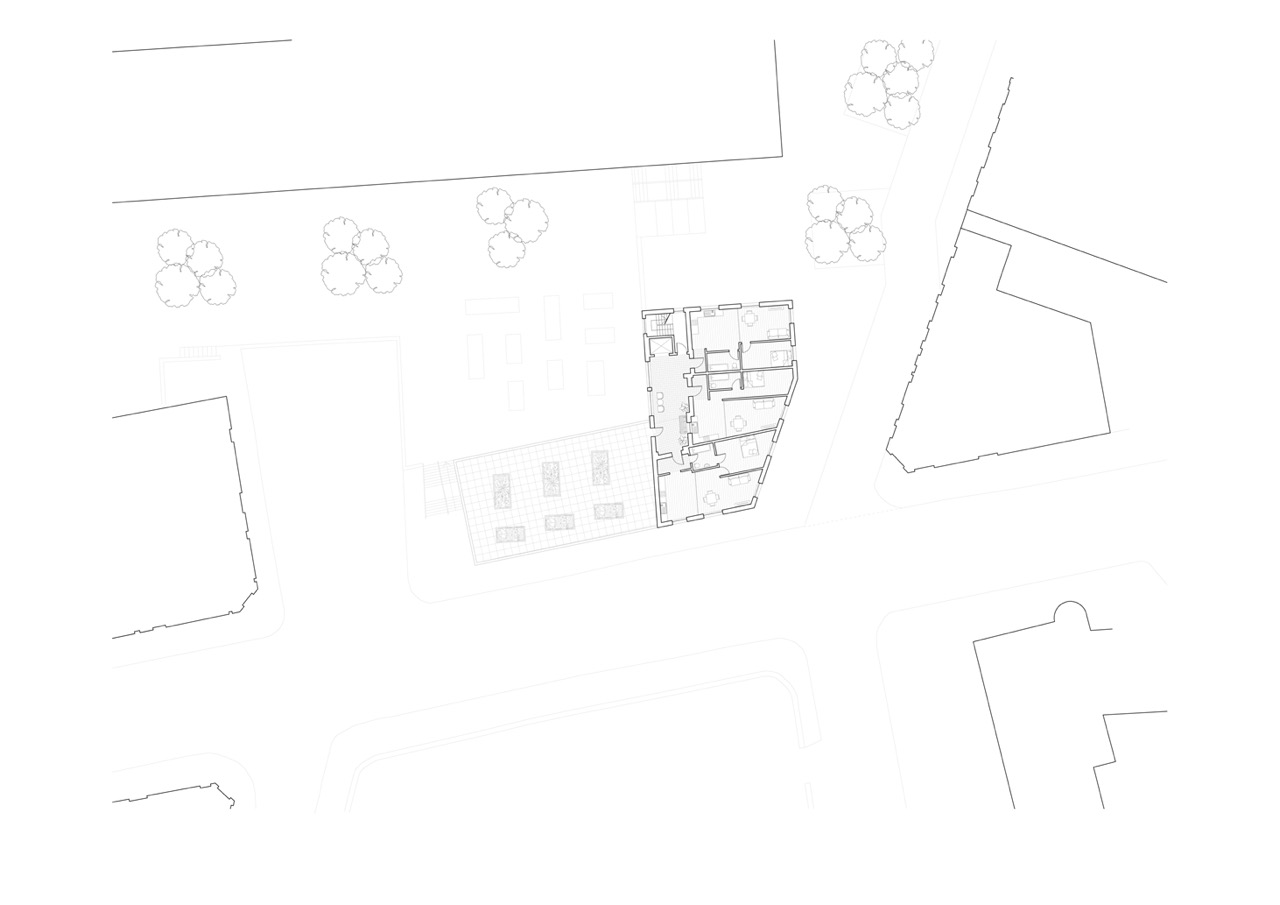
The project offers numerous opportunities for a variety of interactions, ranging from engagement with the broader public, to facilitating neighbourly connections. The garden space allows for intergenerational interactions between elders and the wider community. The rooftop garden and generous walkways lying between the garden vista and the flats allow for the residents to have privacy among themselves.
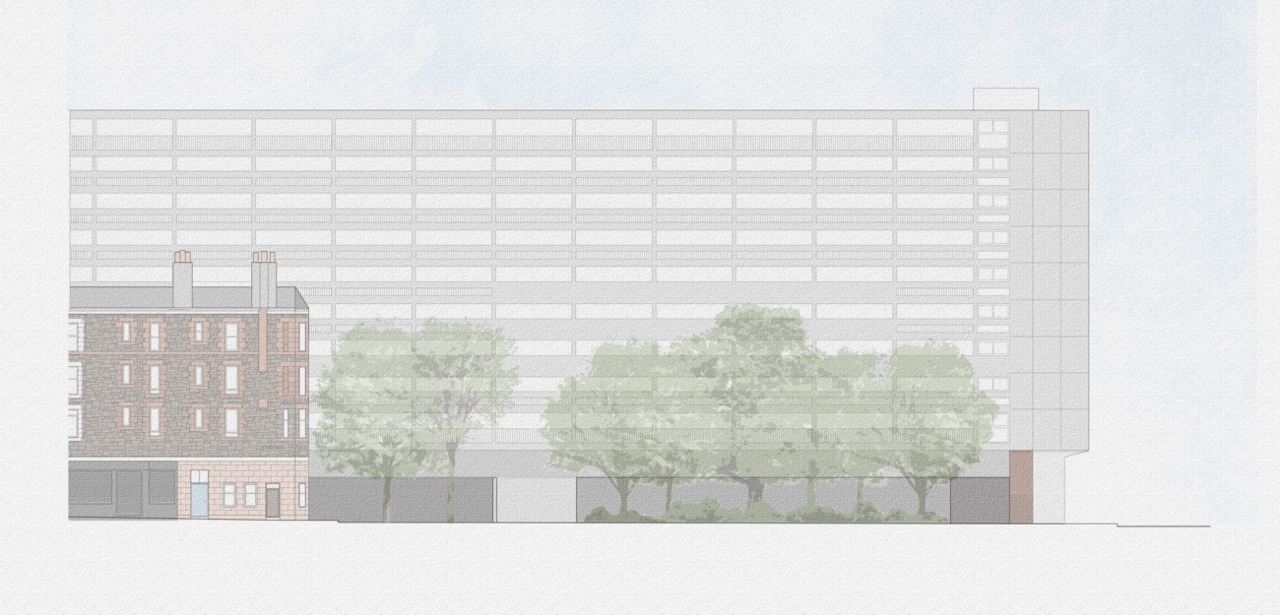
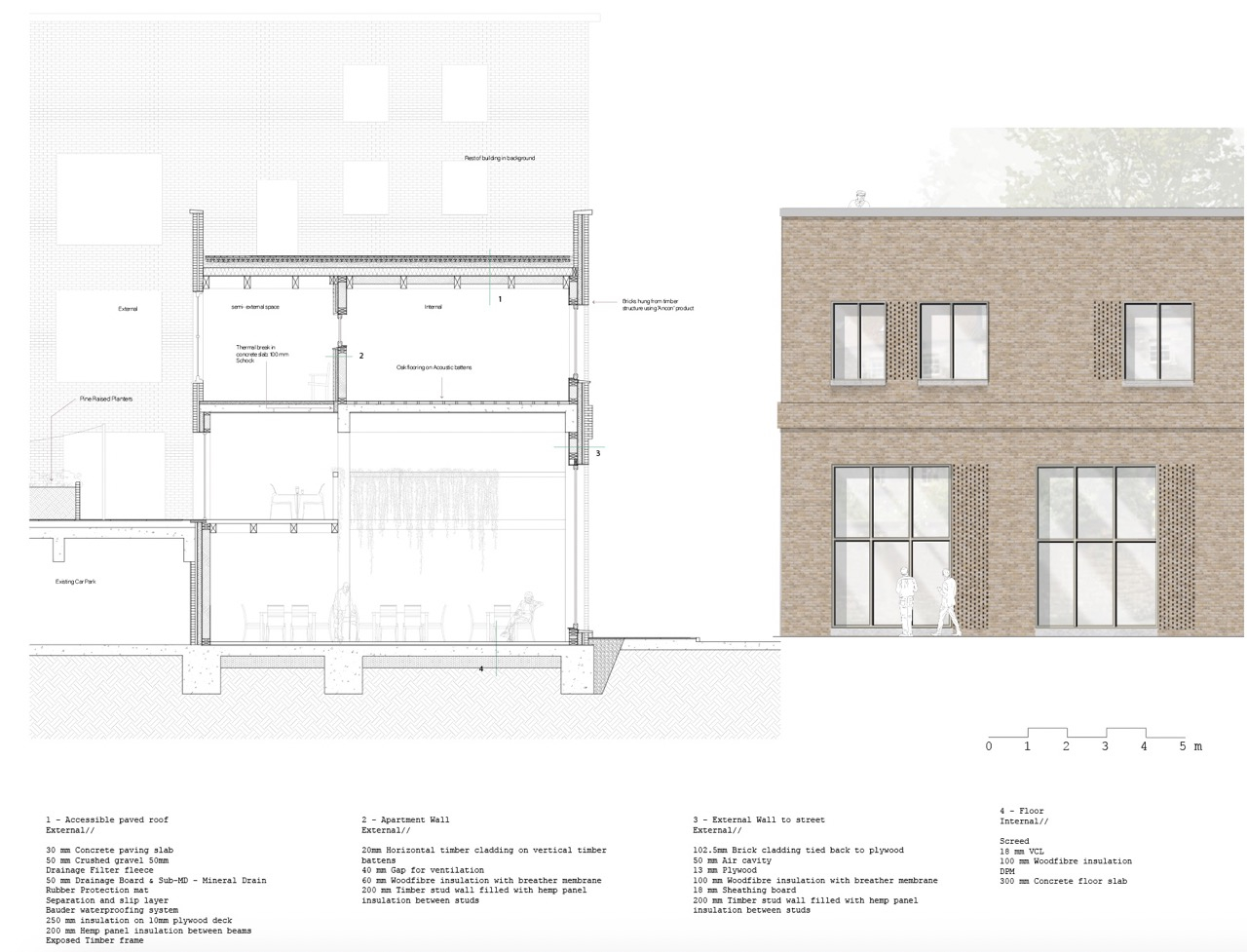
The building is constructed from a combination of long lasting materials and more temporary elements which facilitates for future reuse. Pre-cast concrete is used as the structural ‘table’ on which a lightweight timber frame sits. Masonry covers the street-facing facade, integrating the building into its urban surroundings. Prefabricated brick screens serve both aesthetic and ventilation pruposes. Careful detailing includes the use of clay tiles in the walkways to reflect the natural setting over which it looks.